Technological Innovation in Environmental Pollution Reduction and Control
Keywords:
Environmental Pollution, Pollution Mitigation, Sustainable Technology, Waste Management, Environmentally Friendly TechnologyAbstract
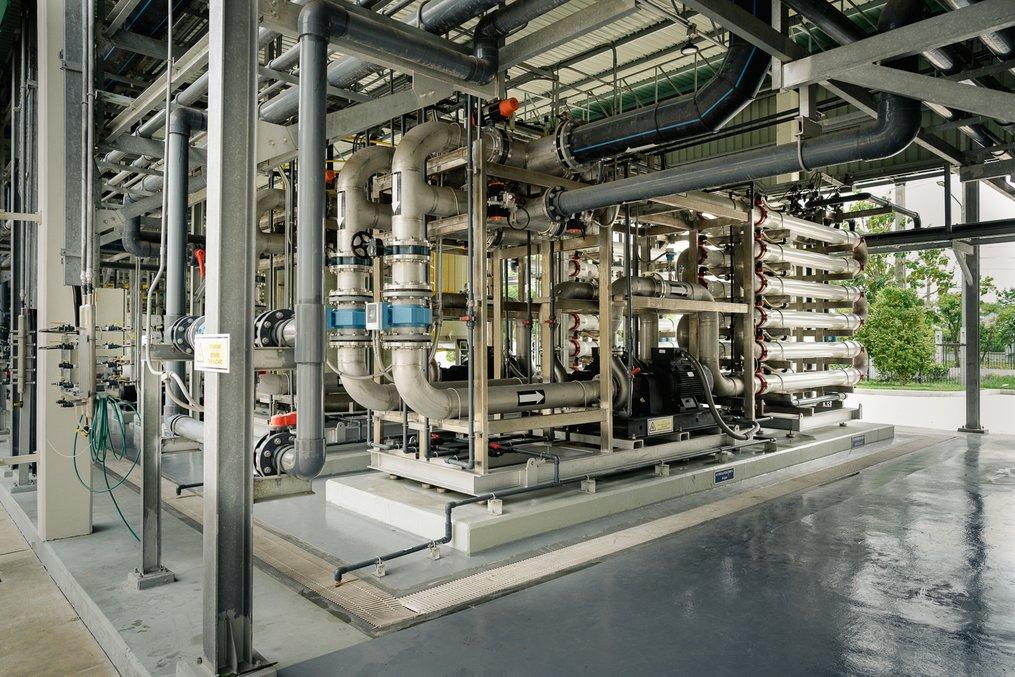
Environmental pollution is one of the increasingly complex problems due to increasing industrial activities, population growth, urbanization, and increasing resource consumption. Air, water, and soil pollution can reduce environmental quality and have an impact on ecosystems and the sustainability of human life. Therefore, technological innovations are needed that can reduce polluting sources while improving the efficiency of environmental management. Various technologies have been developed, including wastewater treatment technology, air emission control, solid waste management and utilization, bioremediation technology, adsorption using porous materials, and the use of nanotechnology-based materials. The application of these technologies can help reduce pollutant concentrations and improve the efficiency of the waste management process. However, the effectiveness of technology is not only determined by the ability to eliminate pollutants, but also needs to consider energy consumption, operational costs, chemical use, secondary waste formation, and environmental impacts throughout its life cycle. A sustainable technology approach is important to ensure that the pollution mitigation process does not generate new environmental problems. The integration of processing technology with sensor-based environmental monitoring, automation, artificial intelligence, and the use of renewable energy sources also has the potential to increase the efficiency and accuracy of pollution control. Thus, technological innovations that integrate technical, economic, and environmental aspects are needed to produce an effective, efficient, and sustainable pollution control system.
References
[1] Z. Dong et al., “Coordinated Reduction of Reactive Nitrogen and Volatile Organic Compounds Enables Greater and More Equitable Integrated Health and Ecological Benefits.,” Environ. Sci. Technol., 2026, DOI: 10.1021/acs.est.5C12151.
[2] K. Daellenbach et al., “Sources of particulate-matter air pollution and its oxidative potential in Europe,” Nature, vol. 587, pp. 414–419, 2020, doi: 10.1038/s41586-020-2902-8.
[3] R. Singh et al., “Emerging Pollutants in Soil and Water: Sources, Risks, and Advances in Removal Technologies for Sustainable Management,” Approximately. Manage., vol. 75, pp. 3522–3537, 2025, doi: 10.1007/s00267-025-02284-1.
[4] J. Ayach, L. Duma, J. Lalevée, H. Hamad, and A. Hijazi, “Comparing Conventional and Advanced Approaches for Heavy Metal Removal in Wastewater Treatment: An In-Depth Review Emphasizing Filter-Based Strategies,” Polymers (Basel)., vol. 16, 2024, doi: 10.3390/polym16141959.
[5] H. Wang, X. Gao, and Y. Zuo, “Research and Application of Water Treatment Technologies for Emerging Contaminants (ECs): A Pathway to Solving Water Environment Challenges,” Water, 2024, doi: 10.3390/w16131837.
[6] M. Lucas, A. Teixeira, N. Jorge, and J. Peres, “Industrial Wastewater Treatment by Coagulation–Flocculation and Advanced Oxidation Processes: A Review,” Water, 2025, doi: 10.3390/w17131934.
[7] A. Raklami, A. Meddich, K. Oufdou, and M. Baslam, “Plants—Microorganisms-Based Bioremediation for Heavy Metal Cleanup: Recent Developments, Phytoremediation Techniques, Regulation Mechanisms, and Molecular Responses,” Int. J. Mol. Sci., vol. 23, 2022, doi: 10.3390/ijms23095031.
[8] M. Bissenova, N. Idrissov, Z. Kuspanov, A. Umirzakov, and C. Daulbayev, “Hybrid adsorption–photocatalysis composites: a sustainable route for efficient water purification,” Mater. Renew. Sustain. Energy, vol. 14, 2025, doi: 10.1007/s40243-025-00319-5.
[9] D. Laishram, S.-B. Kim, S. Lee, and S. Park, “Advancements in Biochar as a Sustainable Adsorbent for Water Pollution Mitigation,” Adv. Sci., vol. 12, 2025, doi: 10.1002/advs.202410383.